How to Descale Your Espresso Machine

July 21, 2026
Di Pacci — Espresso Machine Maintenance Guide
How to Descale Your Espresso Machine

✍️ By Mik Di Pacci · Founder & CEO, Di Pacci Coffee Company · Updated July 2026

Scale is the silent machine killer. Calcium and magnesium minerals from your tap water slowly build up inside boilers, thermocoils, and group heads over months of daily use — restricting water flow, dropping brew temperature, and degrading coffee flavour long before anything looks wrong on the outside. Regular descaling is the single most important maintenance task for any espresso machine, and the most commonly skipped. This guide covers when to descale, what to use, and the exact process for every machine type.

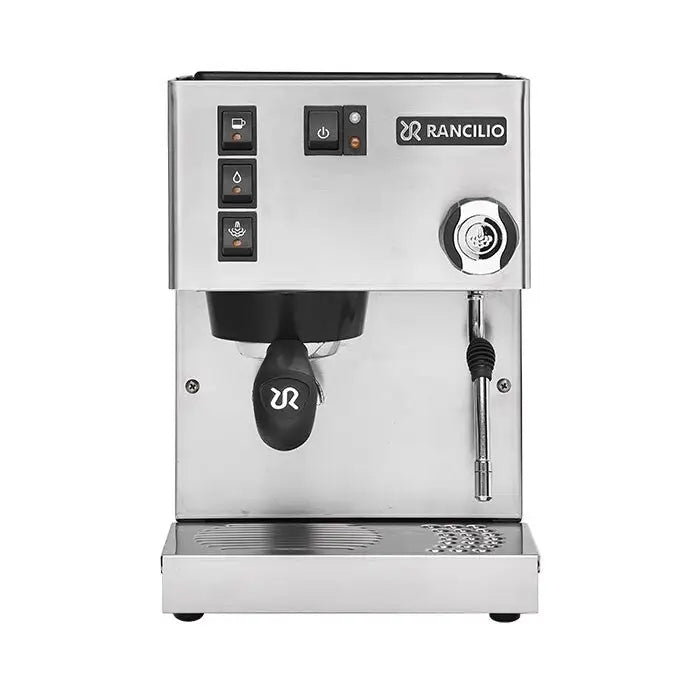
Rancilio Silvia V6 home espresso machine — Di Pacci Sydney Breville Barista Express espresso machine — scale builds inside boiler and group head
Scale builds up inside every espresso machine — from entry-level Breville to prosumer Rancilio — invisible until performance drops or the machine fails.
2–3 monthsTypical descale interval
30 minAverage descale time
30–40%Performance loss from scale
$15–$30Cost of descaler solution
⚡ Quick Answer Descale every 2–3 months in soft water (Sydney, Melbourne) or monthly in hard water (Adelaide, Perth, Brisbane). Use a food-safe liquid descaler — never vinegar on a machine with rubber seals. Run the descaler solution through the machine, then rinse 2–3 times with fresh water before brewing coffee again. Check your machine's manual for its specific descale program if it has one.
1 — What Is Scale and Why Does It Damage Your Machine?

Every time you brew espresso, the water in your machine heats up. As water temperature rises, dissolved minerals — primarily calcium carbonate and magnesium — precipitate out of the water and attach to the hot surfaces inside your machine: the boiler walls, heating element, internal tubing, group head, and thermocoil. This chalky white or grey mineral deposit is called limescale, or simply scale.

Scale builds slowly and invisibly. You won't see it until you open the machine. But its effects are very real: scale insulates heating elements, forcing them to work harder to reach brew temperature. It narrows internal pathways, restricting water flow. It can cause uneven temperature distribution across the group head. Left long enough, it blocks solenoid valves, damages pump seals, and causes boiler failure — repairs that cost far more than a lifetime supply of descaler.

Coffee Tastes Flat or Sour

Scale lowers brew temperature — under-extracted, flat, sour coffee is often scale, not beans or grind.

🐌 Slow Water Flow

Scale narrows internal pathways. Shots running unusually slowly despite correct grind often means scale blockage.

Longer Heat-Up Time

If your machine takes noticeably longer to reach temperature than it used to, scale is insulating the heating element.

💧 White Deposits on Surfaces

Visible white crust around the group head, steam wand tip, or water tank outlet — a clear visual indicator.

🔊 Pump Sounds Louder

A pump working against restricted pathways runs louder and harder. If your machine suddenly sounds different, check for scale.

🌡️ Inconsistent Temperature

Scale causes hot and cold spots in the boiler. Temperature swings between shots that never used to happen.

💡 The Honest Truth Most machines Di Pacci services arrive for repair with heavy scale that could have been prevented with a $20 descaler every few months. The repair bill is always more than the descaler. A machine serviced regularly for descaling lasts decades. A machine that's never descaled may need major boiler or pump work within 3–5 years.
2 — How Often Should You Descale?

Descale frequency depends primarily on your water hardness and how many coffees you make per day. Australian water varies significantly by city — Sydney and Melbourne are comparatively soft, while Adelaide, Perth and Brisbane are harder and build scale faster.

Water Type City (approx.) Daily Use — 1–2 coffees Daily Use — 3–5 coffees
Soft (0–60 ppm) Sydney · Melbourne Every 3 months Every 6–8 weeks
Medium (60–120 ppm) Canberra · Hobart Every 2 months Every 4–6 weeks
Hard (120–200 ppm) Brisbane · Perth · Gold Coast Every 6–8 weeks Every 3–4 weeks
Very Hard (200+ ppm) Adelaide · Parts of regional NSW/QLD Every 4–6 weeks Every 2–3 weeks

💡 The easiest approach: descale when your machine prompts you (most modern machines have a descale indicator light) — or set a calendar reminder for every 8 weeks as a universal baseline. Using a water filter reduces scale formation significantly and extends descale intervals.

3 — What Descaler to Use — Di Pacci's Recommendations

Use a food-safe, purpose-formulated espresso machine descaler. Never use vinegar — acetic acid degrades rubber seals and gaskets, leaves lingering odour, and isn't effective against calcium carbonate scale in commercial quantities. Purpose-made descalers use citric or malic acid blends that dissolve scale without damaging seals.

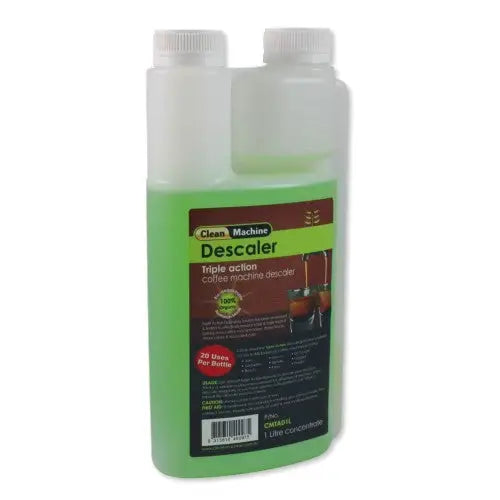
Clean Machine Triple Action Coffee Descaler — Australia's most trusted espresso machine descaler Clean Machine Triple Action Descaler — Australia's No.1 choice for home and commercial machines for 9+ years. Available at Di Pacci.
Best All-Round Clean Machine Triple Action Descaler

Australia's most trusted home and commercial descaler for 9+ years. Universal compatibility — Breville, Jura, Saeco, DeLonghi, Gaggia, Rancilio, ECM and more. 50ml per cycle, food-safe organic acids. Available in 250ml and 1L.

Shop Clean Machine Descaler →
Eco Formula Cafetto LOD Liquid Organic Descaler

Biodegradable, certified organic acids. Excellent for domestic and small office machines — thermoblock, capsule, and boiler-based. Gentle on seals. 1L bottle. Cafetto is one of the most widely used café cleaning brands in Australia.

Shop Cafetto Descaler →
Indicator Formula Cafetto Spectre Descaler

Powder descaler with pH-sensitive dye that changes colour when descaling is complete — removes guesswork from the cycle. 4 × 25g sachet pack, ideal for standard home machines. Eco-friendly formula.

Shop Cafetto Spectre →
⚠️ Never Use Vinegar

Vinegar (acetic acid) is too weak to dissolve calcium carbonate scale effectively and too corrosive to rubber components simultaneously — the worst of both outcomes. It degrades O-rings and seals, leaves persistent flavour tainting that takes many cycles to rinse out, and can void your machine warranty. Use only purpose-formulated espresso machine descaler.

4 — Descaling by Machine Type
🤖 Fully Automatic (Bean-to-Cup)

Most automatics (Jura, Melitta, Carimali, Dr Coffee) have a built-in descale program — the machine prompts you when needed. Follow the on-screen instructions exactly. Use the brand's recommended descaler or a universal food-safe alternative. Typically takes 30–45 minutes including rinse cycles.

Browse automatic machines →
Semi-Automatic (Espresso Machine)

Breville, Rancilio, Lelit, ECM, Bellezza and similar machines require manual descaling — run descaler solution through the group head, steam wand, and hot water tap in cycles. No descale program on most models. See the step-by-step guide below.

Browse semi-automatic machines →
💊 Pod / Capsule Machine

Nespresso, Lavazza and pod machines scale quickly in their small thermocoils. Most have a descale button sequence — hold two buttons simultaneously, or check your manual. Run manufacturer-approved descaler. Rinse thoroughly — capsule machines are sensitive to descaler residue.

Browse cleaning products →
5 — How to Descale a Semi-Automatic Espresso Machine — Step by Step

This process applies to most home espresso machines — Breville, Rancilio Silvia, Lelit, ECM, Quick Mill, Profitec and similar. Always check your specific machine's manual for model-specific instructions. The general process takes around 30 minutes.

Semi-automatic espresso machine descaling process — Di Pacci guide Semi-automatic machines require manual descaling — follow the 7-step process below for all single boiler, heat exchanger and dual boiler machines.

What you need: Food-safe descaler (Clean Machine or Cafetto LOD), fresh water, container large enough for your machine's reservoir, a drip tray or towel.

1
Empty and Mix the Descaler Solution

Remove any coffee from the machine — portafilter, basket, beans from hopper. Empty the water tank completely. Mix the descaler with water according to product instructions — typically 50ml of descaler to 500ml–1L of water. Fill the water tank with the solution.

2
Run Solution Through the Group Head

Place a container under the group head. Turn the machine on and run about half the descaler solution through — run the pump in 10-second bursts with 30-second pauses to let the solution dwell and dissolve scale. Don't let the pump run dry.

3
Run Solution Through the Steam Wand

Open the steam valve and run the remaining descaler solution through the steam wand — this descales the steam boiler outlet and wand tube. Purge until the tank is nearly empty. Scale often accumulates heavily around the steam path.

4
Soak — Let It Dwell

Leave the solution in the machine for 15–20 minutes. This dwell time is when the organic acids actually dissolve the calcium deposits. Don't skip it — running solution through quickly without a dwell period significantly reduces effectiveness.

5
Flush Through Completely

Run the remaining solution through the group head and steam wand until the tank is fully empty. You may see discoloured water — that's dissolved scale. This is normal and means it's working.

6
Rinse — Fill and Run Fresh Water (Repeat 2–3 Times)

Fill the tank with fresh, clean water. Run the entire tank through the group head and steam wand. Repeat this rinse cycle at least 2–3 times. This removes all descaler residue — critical because even small amounts of descaler affect coffee flavour and can irritate throats.

7
Run a Test Shot

Pull a blank shot of water through the group head and taste a small amount — it should taste completely neutral, with no chemical or acidic flavour. If there's any off-taste, run another rinse cycle. Once neutral, reinstall the portafilter and you're ready to brew.

🔧 Pro Tip — The Dwell Cycle Most home baristas run descaler straight through without pausing — then wonder why it didn't work. The dwell time is what does the work. Run solution in, let it sit 15–20 minutes, then flush. For heavily scaled machines, consider doing two descale cycles back to back before the final rinse.
6 — Full Espresso Machine Maintenance Schedule

Descaling is one part of a complete maintenance routine. Here's the full schedule Di Pacci recommends for home espresso machines:

📅 After Every Use
  • Wipe steam wand immediately after steaming
  • Purge steam wand tip
  • Knock out grounds and rinse basket
  • Run blank water shot through group
  • Empty drip tray
📆 Weekly
  • Backflush with water (3-way solenoid machines)
  • Backflush with detergent tablet
  • Rinse portafilter and basket in hot water
  • Wipe group head gasket
  • Clean water tank
🗓️ Monthly
  • Soak portafilter and basket in detergent
  • Clean grinder burrs
  • Inspect group head gasket for wear
  • Check water filter (if fitted)
  • Descale (hard water areas)
⚙️ Every 2–3 Months
  • Full descale cycle
  • Replace water filter
  • Deep clean steam wand
  • Check and replace gaskets if hardened
  • Professional service (annually)
7 — Frequently Asked Questions
Every 2–3 months for soft water cities like Sydney and Melbourne; every 4–6 weeks for harder water areas like Brisbane, Perth and Adelaide. If your machine has a descale indicator light, follow its prompt. As a baseline, every 8 weeks works well for most Australian homes. Using a water filter significantly reduces scale formation and extends the interval between descaling sessions.
No — we strongly recommend against using vinegar. Acetic acid (vinegar) is too weak to effectively dissolve calcium carbonate scale, too corrosive to rubber O-rings and seals, leaves a persistent off-flavour that takes many rinse cycles to clear, and can void your machine warranty. Always use a purpose-formulated espresso machine descaler — food-safe, seal-compatible, and specifically designed to dissolve coffee machine scale without damage.
Typically 30–45 minutes including rinse cycles. The descaler solution needs a 15–20 minute dwell time inside the machine to dissolve scale — don't rush this step or skip it. After the dwell, flushing takes about 5 minutes, then 2–3 full rinse cycles with fresh water. Fully automatic machines with built-in descale programs are often more automated but take similar time overall.
Any food-safe, universal espresso machine descaler works with Breville machines. Di Pacci recommends the Clean Machine Triple Action Descaler — specifically compatible with Breville among other major brands, trusted by Australian service technicians for over 9 years. Cafetto LOD Liquid Organic Descaler is also excellent. Follow the descale instructions in your specific Breville model's manual for machine-specific steps.
Yes — always descale when the indicator light activates, regardless of your water hardness. The machine calculates scale buildup based on water volume passed through, not hardness alone. In soft water areas the light may activate less frequently, but when it does, the scale has accumulated to a level the machine's sensors have detected. Ignoring the light is how small scale buildups become serious blockages.
Scale buildup progressively degrades performance and eventually causes mechanical failure. Early effects: flatter coffee, lower brew temperature, slower water flow. Mid-stage: inconsistent extraction, pump strain, temperature instability. Late-stage: blocked solenoid valves, damaged pump seals, boiler failure. Boiler replacement or pump repair can cost $200–$600+ — far more than a lifetime supply of descaler. Most preventable repairs Di Pacci's service team handles are scale-related.
At least 2–3 full tank rinse cycles with fresh water. After the final rinse, pull a blank water shot through the group head and taste a small amount — it should be completely neutral with no chemical or acidic flavour. If there's any off-taste, run another rinse cycle. Never brew coffee until the rinse water tastes completely clean. Descaler residue affects coffee flavour and can cause throat irritation.
Yes — significantly. A quality water filter reduces the mineral content of the water entering your machine, dramatically slowing scale formation. Di Pacci stocks water filters for most home machine brands. Filtered water also improves coffee taste — the right mineral balance contributes to extraction quality. A filter is one of the best value accessories you can add to any espresso machine setup.
About the Author Mik Di Pacci — Founder & CEO, Di Pacci Coffee Company

Mik Di Pacci is the Founder & CEO of Di Pacci Coffee Company, Australia's largest coffee machine specialist since 2010. Di Pacci's in-house service team repairs and services espresso machines across Australia daily — the most common preventable repairs they handle are scale-related. Every recommendation in this guide comes from 15+ years of real-world machine maintenance experience.

Get the Right Descaler for Your Machine Clean Machine · Cafetto · Franke · and more — Australia-wide shipping · Free over $200 · (02) 9758 0760

Leave a comment